Founder notes
How to turn restaurant sales data into practical decisions
Three practical examples of using restaurant data to test a drinks prompt, make sides easier to order and help guests discover a house speciality.

Published on Zvelto:
To turn restaurant sales data into useful decisions, start with a specific question, check what might explain the pattern, and choose a change you can test. Then measure whether it helped.
A report showing your best-selling dishes is a useful starting point. It becomes more useful when you can connect it with the menu guests see, the choices they make and the feedback they leave.
For example, a popular main might rarely be ordered with a drink. A side dish might be easy to miss. A house speciality might receive enthusiastic reviews from the guests who try it, while attracting relatively few orders.
Each observation suggests something to investigate. None tells you the answer on its own.
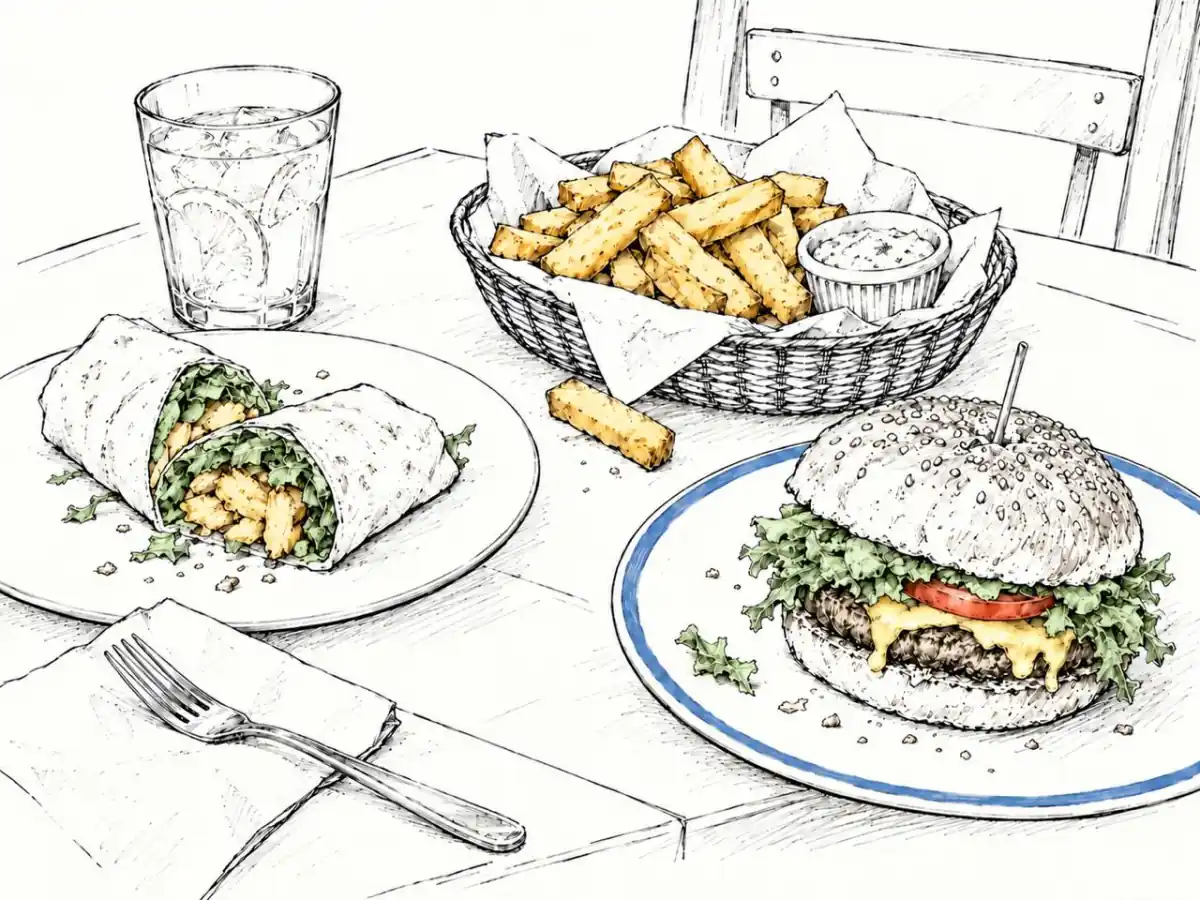
Here are three illustrative examples, using familiar restaurant menu items.
1. Help guests find a drink that goes with their meal
Imagine a restaurant where chicken wraps sell well, but relatively few wrap orders include a drink.
The sales data gives the team a question: why are guests ordering the main without anything to drink?
There could be several explanations. Some guests may already have a drink. Others may be ordering food to take home. The drinks section might be difficult to find, or popular options might have been unavailable.
Before changing the menu, look at the relevant ordering journey. Check that drinks were available and that the pattern holds across enough orders to be worth investigating.
One possible test is to offer a small selection of drinks immediately after someone adds a wrap to their basket. Show the price clearly and make the suggestion easy to skip.
That is a specific change the restaurant can evaluate.
The main measure is the proportion of wrap orders that also contain a drink. It is also worth checking whether guests continue to complete their orders and whether the additional sales make a useful contribution after costs.
Compare similar services and ordering channels where possible. A busy Friday evening and a quiet Monday lunchtime can produce different results for reasons unrelated to the prompt.
The decision is whether this particular suggestion helps guests complete their meal and works commercially for the restaurant.
2. Make an optional side easier to add
Now imagine the restaurant sells chips and garlic dip, but guests rarely add them to a main.
Perhaps they are happy with the meal as it is. But perhaps ordering a side means leaving the main dish, opening another category and finding the item again.
That gives the team a different question: is the ordering process making a relevant addition unnecessarily difficult?
Walk through the menu on a phone. How many steps does it take to add chips? Is the portion size clear? Can the guest see what the dip costs?
If your ordering tools capture menu views and basket activity, those signals can help you investigate. If they do not, reviewing the journey yourself is still a useful place to start.
A practical test could be to place “Add chips” and “Add garlic dip” beside the main, with clear prices and a simple selection.
There is no need to introduce a discount to test whether convenience makes a difference.
Measure how often guests add the sides, alongside order completion and the contribution those orders make. Check the effect on the kitchen too. An increase in sides may be less useful if it creates a bottleneck during the busiest part of service.
Look at the whole order. Guests might switch from another side rather than buy an additional item. That can still be worthwhile, but it changes how you interpret the result.
3. Give a house speciality a clearer place on the menu
For the third example, imagine a restaurant’s house burger gets positive mentions in guest feedback but sells less often than several other mains.
It might deserve more attention. It might also appeal to a smaller group of guests, have a higher price or take longer to prepare.
Bring the information together before deciding to promote it. Look at sales and availability, read the feedback in context, and check whether it is a dish the kitchen can consistently deliver well.
Then review its place on the menu.
Is it buried among similar options? Does the description explain what makes it distinctive? Is there an accurate, appealing photograph? Would a first-time guest understand why the restaurant recommends it?
One possible test is to give the burger a more prominent position and identify it as the house speciality, if that is an honest description.
Keep the change focused. Moving the item, changing its price and rewriting half the menu at once would make the result harder to interpret.
Measure whether more guests choose it, what happens to the sales of other mains, and whether service and feedback remain healthy.
The aim is to help guests discover something the restaurant is proud to serve. The test tells you whether the new presentation helps them make that choice.
Make the test clear enough to learn from
These examples begin with different observations, but each needs the same discipline: define what you have noticed, choose a plausible change and decide how you will judge it.
Before starting, write down:
- The question: What are we trying to understand?
- The change: What exactly will guests or staff experience differently?
- The measure: What result would make this worth keeping?
- The owner: Who will review it and decide what happens next?
Record the starting position and when the change went live. Note anything that could affect the comparison, such as stock shortages, a promotion or a different mix of customers.
Allow enough orders to accumulate before drawing a conclusion. A handful of purchases can suggest a question, but the next few customers may change the picture considerably.
Where possible, test one change at a time. The drink prompt and the easier side selection may affect the same basket, so their individual benefits cannot simply be added together.
If the result is unclear, investigate further. If the change makes ordering harder or creates problems during service, adjust it or remove it.
Where Zvelto fits
We’re building Zvelto to help restaurants connect their menu, sales and review data with decisions they can make and act on.
These examples show the kind of everyday work we want to make easier: spotting a useful pattern, understanding its context, making a relevant change and checking what happened afterwards.
A good starting point is one question about your own restaurant. Choose something you can investigate with the information you already have, and a change small enough to test properly.
What is one decision your restaurant’s data could help you make this week?